


Your Personal (AI) Banker is coming soon
- Ivo Bozukov

- Nov 4, 2025
- 4 min read
When visiting physical banks was a more common routine in our lives, we had personal relationships with some of our local bank staff. At least we knew their name and could visit or phone them with issues and questions. They would come to know us, our lives and help us make financial plans and decisions. It was however never clear if they made the decisions based on our best outcome or based on their optimal commission structure.
In the context of the complex world of finance, how much could an individual not from that world really appreciate how investments actually worked? As the digitalisation of financial services took hold, things became a lot less personal, but the distance between us and the financial products we needed or wanted grew shorter. We could now buy and sell instruments long out of reach on a click of a button. Stocks, bonds, option puts and calls, future longs and shorts along with Pro-IPO shares, Crypto and other currencies as well as Real World Assets. A myriad of terms and rules at our disposal, but with no one to really bridge the gap of knowledge required to effectively execute this newfound power. Surely with the advent of technology this is a trend which most people would’ve expected to continue.
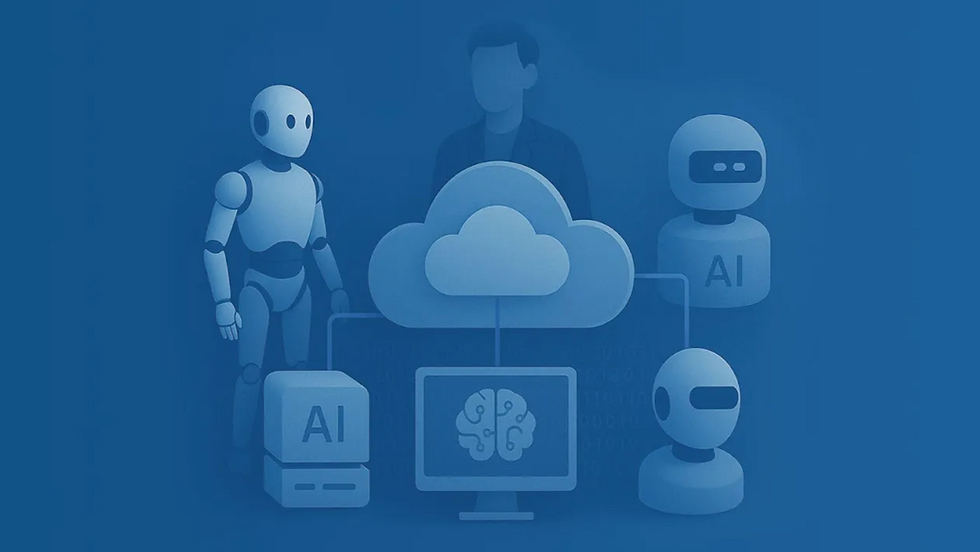
In come AI agents and they could be set to bring back to the “good” old days (well, sort of).
What are AI agents?
Artificial intelligence (AI) has already changed how we manage money, from chatbots in our banking apps to robo-advisers that build investment portfolios. But a new generation of AI agents could take that transformation much further. Unlike today’s assistants, which mostly respond to instructions, AI agents can think through a task, take action across multiple systems, and learn from the results. In short, they don’t simply give answers; they get things done behind the veil of complex technology and convoluted systems.
Personal Banking
In personal banking, AI agents could soon act like digital money managers. Imagine your banking app not only telling you that your energy bill is due, but first recommending how you should pay it and after confirmation (hopefully), automatically transferring money from your least “useful” account to pay it, or moving spare cash into an investment fund to maximize your use of funds. These agents could even negotiate better deals by comparing loan or mortgage offers in real time.
Some banks are already moving in this direction. Kasisto, for example, powers conversational banking assistants used by major institutions like J.P. Morgan and DBS Bank. These assistants can already handle complex queries such as “How much did I spend on restaurants last month?” and are learning to perform transactions on their own. As AI agents mature, they could become the default way people interact with their finances.
Customer Service That Actually Helps
Customer service is another area already feeling the impact. Traditional chatbots often frustrate users, but AI agents are learning to handle complex, multi-step requests. Instead of saying, “I’ll connect you to a representative,” an AI could authenticate you, review your claim, issue a refund, and send a confirmation - all without human input. Some banks report these systems are cutting call volumes and improving satisfaction scores dramatically.
Automating Financial Advice
AI agents could also change how financial advice works. Today’s robo-advisers (like Wealthfront or Nutmeg) suggest portfolios based on your goals and risk tolerance, then automatically rebalance your investments. But agentic AI could go further, carrying out a human adviser’s recommendations, finding tax-efficient options, or even switching accounts and products for you.
This could make professional-quality advice accessible to everyone, not just the wealthy. However, it also raises questions about trust and oversight. If an AI agent makes an investment decision that turns out badly, who’s to blame? The customer? The bank? Or the company that built the AI?
The Liability Question
Of course, the more responsibility AI agents take on, the bigger the question of liability becomes. If an agent accidentally pays the wrong person or makes a risky trade, who’s responsible? In most countries, financial firms are legally accountable for the systems they deploy. That means the liability would still fall on the bank or fintech, not the customer - at least for now. But as agents become more independent, regulators will need to update the rules around accountability, auditing, and consumer protection.
Looking Ahead
Over the next few years, we can expect AI agents to become a regular part of financial life. They’ll orchestrate everything from bill payments and savings goals to mortgages and pensions. Fintechs that embrace this shift will likely gain efficiency and loyalty, but only if they earn users’ trust by being transparent, secure, and reliable.
For consumers, the future could be one of effortless financial management, where money quietly works in the background. For the industry, it’s both an opportunity and a responsibility: to ensure these powerful digital agents act in our best interests, and that someone is clearly accountable when they don’t.


Comments